
Does Age Really Equal Wisdom? Why Experience Alone Isn't Enough.
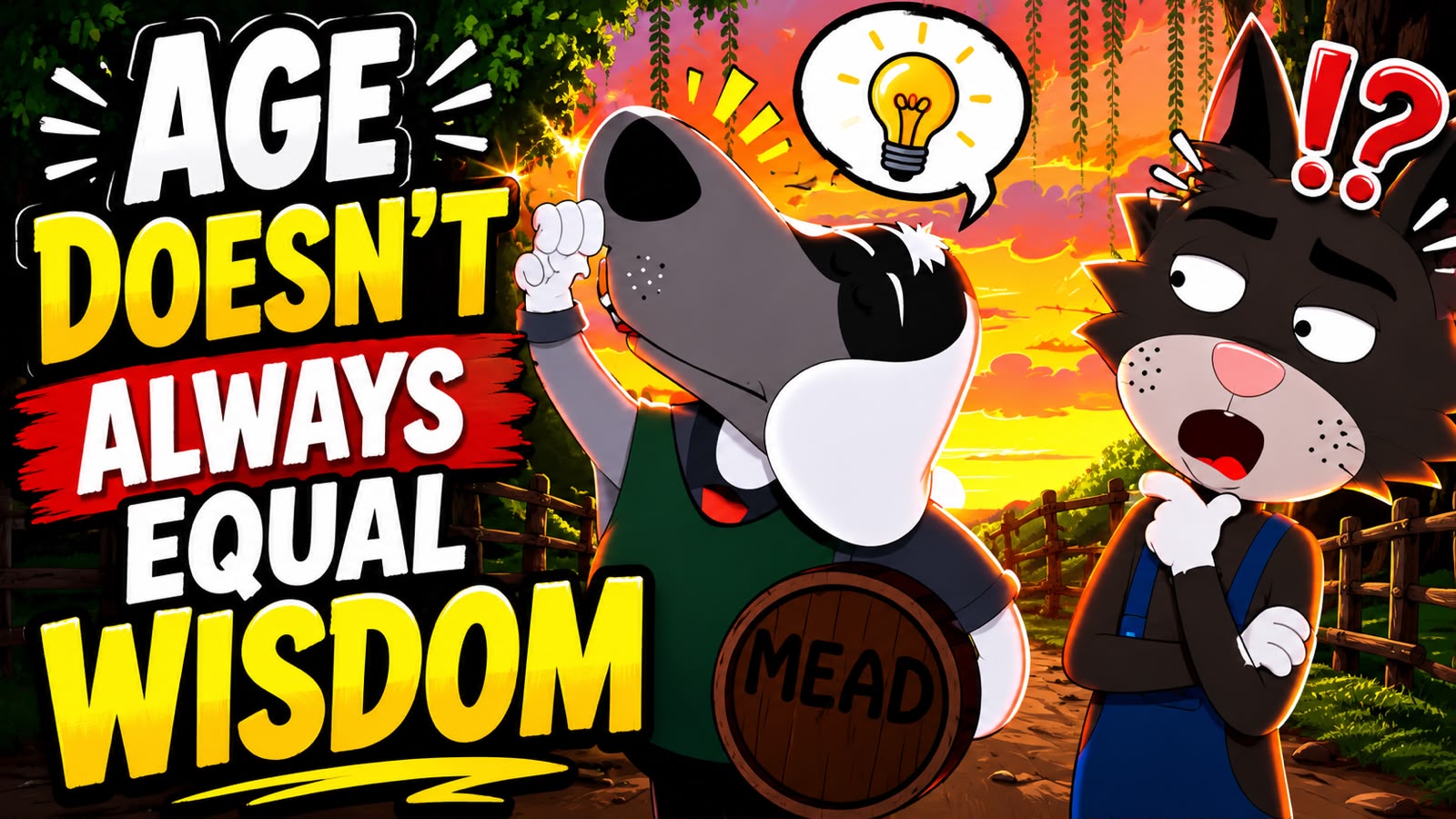
Does age automatically mean wisdom?
Across many African societies, age has long been
associated with wisdom. Elders are respected not only because they have lived
longer, but because they are expected to possess the knowledge, judgement and
life experience needed to guide younger generations. African proverbs often
remind us that an elder has seen what a child has yet to imagine.
But does age really equal wisdom? Does growing older
automatically make someone wise, or does true wisdom require something more
than experience alone?
A thought-provoking folk tale explores this question
through a conversation between an old cat and a younger dog. The elderly cat
wonders why the dog rarely seeks his advice despite his age. The dog responds
respectfully, acknowledging that older people often offer valuable guidance.
However, he adds that advice carries greater weight when it comes from someone
whose life reflects the principles they teach.
His answer highlights an important truth: wisdom is
not measured simply by the number of years a person has lived. It is measured
by the consistency between what they say and how they live.
Throughout history, many people have accumulated years
without necessarily accumulating wisdom. Experience alone teaches very little
if lessons are ignored, mistakes are repeated, or harmful behaviour becomes a
lifelong habit. Age may increase knowledge, but wisdom requires something more.
It requires humility, reflection, accountability and a willingness to grow.
This distinction matters in modern African society
more than ever. Young people today are constantly exposed to a wide range of
information through schools, social media, books, and the internet. Respect for
elders remains an important cultural value. Still, younger generations are
increasingly asking a reasonable question: should advice be followed simply
because it comes from someone older, or should it also be evaluated by the
example that person sets?
This is not an argument against respecting elders.
Respect remains one of the strongest foundations of African culture. Rather, it
is an invitation to recognise that respect and critical thinking can coexist.
An elder who demonstrates honesty, kindness, responsibility and integrity
naturally earns influence. Their actions strengthen their words. On the other
hand, advice loses credibility when it consistently contradicts the life of the
person giving it.
The same principle applies far beyond the family.
Parents, teachers, religious leaders, politicians, employers and community
leaders all shape society through both instruction and example. Leadership has
never been about speaking the loudest. It has always been about living the
values one expects others to follow.
Perhaps this is why children often imitate behaviour
more readily than they obey instructions. Human beings learn by observation
long before they understand philosophy. A parent who teaches honesty while
living honestly leaves a deeper impression than one who talks about honesty.
Likewise, a leader who embodies discipline inspires more trust than one who
merely demands it from others.
The story therefore invites us to reconsider the
relationship between age and wisdom. Growing older is inevitable. Becoming wise
is a lifelong choice.
Real wisdom is not proven by grey hair, titles or
seniority. It is demonstrated through character, consistency and the ability to
leave behind an example worth following. Years may give us experience, but only
reflection transforms experience into wisdom.
In today's world, where information is widely
available, authority is increasingly earned rather than assumed. People of all
ages are judged not only by what they know, but by how consistently they apply
that knowledge in their daily lives. This shift does not diminish respect for
elders; it reinforces the idea that genuine wisdom is demonstrated through
example.
Perhaps the greatest legacy any generation can leave the next is not simply advice, but a life that makes that advice believable.
What do you think? Does age automatically deserve authority, or should wisdom be measured by the example a person sets? Can someone be young and wise while an older person still has much to learn?
Watch the video: https://youtu.be/2xh__hljc_Q
Related reading:
Five Hours in Bed: A Satirical Look at Sexual
Performance Pressure and Modern Masculinity:
https://katakata.org/news/-1780399007
Bulletproof Donkey: Faith, Fear, and the Performance
of Spiritual Power: https://katakata.org/news/-1780132192
Gold Does Not Lose Its Value: A Conversation on Love,
Judgment, and Second Chances: https://katakata.org/news/-1781267558