
Yaa Asantewaa and the Ashanti Resistance: Defending Identity Against Colonial Rule.
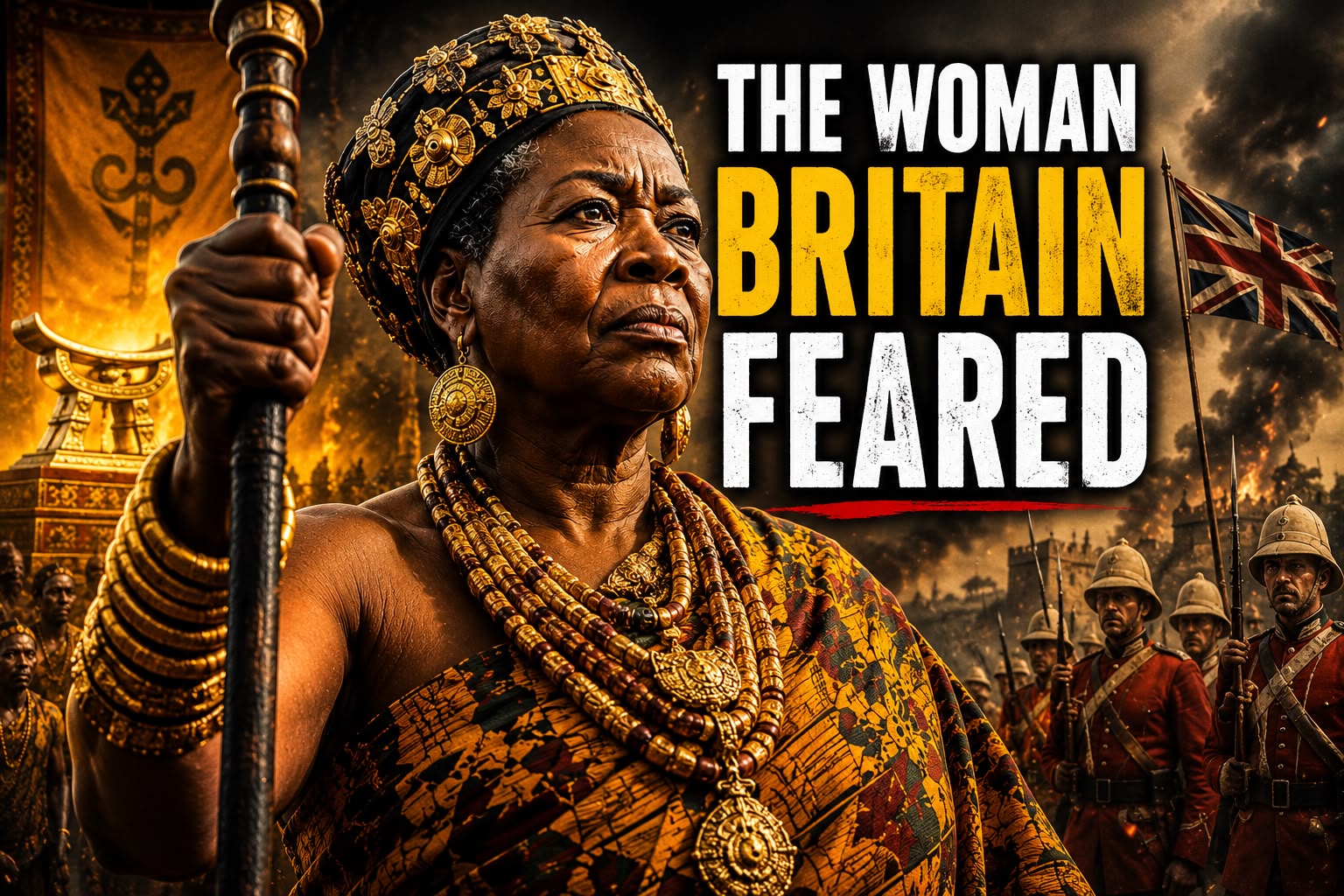
The story of Yaa Asantewaa remains one of the most powerful accounts of resistance in African history. More than a military struggle, it is a story of leadership, cultural survival, and a people's determination to defend their identity against imperial domination.
Long before
the formation of modern Ghana, the Ashanti Kingdom had emerged as one of the
most organised and influential civilisations in West Africa. Renowned for its
wealth, political sophistication, military strength, and gold trade, the
kingdom represented far more than territorial authority. Ashanti society was
built upon deeply rooted spiritual traditions, social order, and a collective
understanding of leadership tied to the dignity of the people.
During the
nineteenth century, however, European imperial expansion intensified across
Africa. British influence in the region initially developed through trade, but
economic relationships gradually evolved into political interference and
military pressure. Like many colonial projects, imperial control did not arrive
suddenly. It advanced slowly through treaties, negotiation, and increasing
interference until domination became institutionalised.
At the
centre of the growing conflict stood the sacred Golden Stool, one of the most
important symbols in Ashanti culture. To the British, it may have appeared to
be a royal artefact linked to political power. To the Ashanti people, however,
the stool carried a far deeper meaning. It represented the spiritual unity of
the nation and the connection between ancestors, the living community, and
future generations. The Golden Stool embodied the moral identity of the Ashanti
Kingdom itself.
When
British authorities demanded control of the stool, the request was understood
not simply as political aggression but as an attack on the kingdom's cultural
and spiritual foundations. The conflict, therefore, became larger than
territory or governance. It evolved into a struggle over identity, dignity, and
the right of a people to preserve what they considered sacred.
Years of
warfare and colonial pressure created growing fear and uncertainty among parts
of the Ashanti leadership. Hesitation slowly replaced confidence as the threat
of British military power intensified. This moment reflects a recurring pattern
throughout history: institutions often weaken internally before they collapse
outwardly. Fear gradually silences conviction, and uncertainty can paralyse
leadership during moments of crisis.
During this
period of hesitation, Yaa Asantewaa emerged as a symbol of moral strength and
resilience. As queen mother of Ejisu, she refused to accept surrender and
challenged the passivity of the kingdom's chiefs. Her leadership inspires pride
and admiration, transforming the struggle into a moral call to action.
Her famous
declaration remains one of the most celebrated moments in African resistance
history: if the men would not defend the Ashanti Kingdom, then the women would
rise to fight.
That
statement carried significance far beyond the immediate conflict. It challenged
traditional assumptions about leadership, courage, and responsibility. Yaa
Asantewaa demonstrated that leadership is most meaningful when exercised during
moments of fear and institutional uncertainty. Her actions showed that moral
courage often emerges from individuals willing to act when established systems
fail.
The war
that followed, widely known as the War of the Golden Stool, became one of the
last major anti-colonial uprisings against British expansion in West Africa.
Although the British eventually defeated the resistance militarily, the
conflict secured Yaa Asantewaa's place as a lasting symbol of African
resilience and anti-colonial struggle.
Her story
continues to resonate today because its themes of cultural autonomy and
resilience inspire hope. Modern societies still face struggles over identity
and influence, reminding us that the fight for dignity endures beyond colonial
history.
In many
ways, the Golden Stool remains a timeless symbol. It represents the principles,
traditions, and identities that communities refuse to surrender despite
external pressure. The Ashanti resistance, therefore, raises an enduring
question: what values must remain protected, even in the face of overwhelming
power?
What makes
the legacy of Yaa Asantewaa so enduring is not only her resistance to empire,
but her understanding that freedom is inseparable from cultural memory and
moral conviction. History repeatedly shows that empires may conquer land and
institutions, but they often struggle to erase a people's deeper identity.
Power can
dominate temporarily, but meaning survives far longer.
The story
of Yaa Asantewaa remains a reminder that resistance is not always defined by
victory on the battlefield. Sometimes, its greatest achievement lies in
preserving dignity, memory, and the courage to defend what a society believes
must never be surrendered.
Watch the video: https://youtube.com/shorts/gceqezh-d54?si=uPP7qMkGn41sU8K1