
Between Tradition and Modernity: Generational Conflict in Urban African Society.
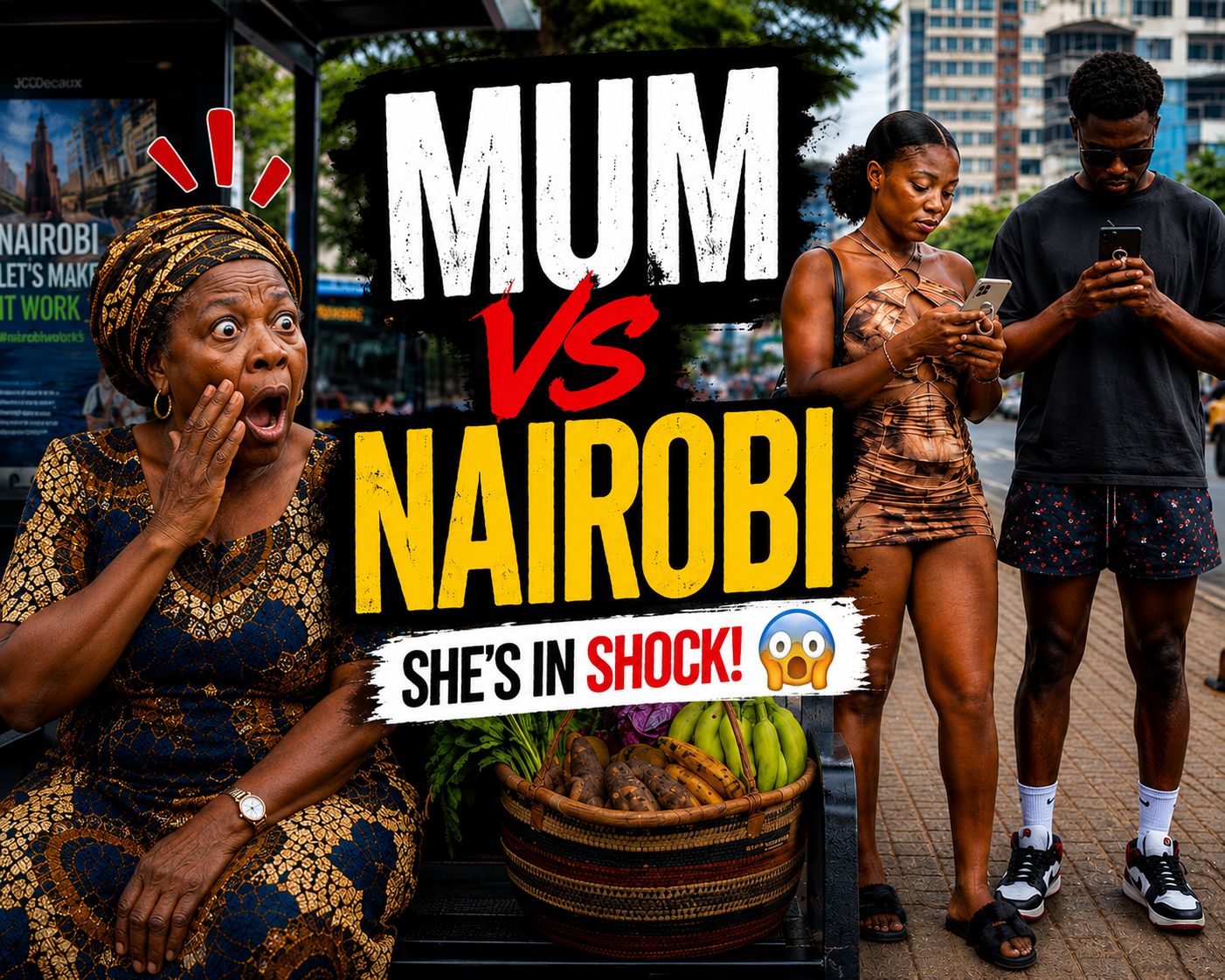
We live in an ever-evolving, technologically advancing society that has rapidly transformed our world in different ways. While we applaud the metamorphoses, one discovers how a cosmopolitan city like Nairobi reflects the growing tension between tradition and modernity through technology, digital work, consumer culture, and changing family values in urban Africa.
Rapid urbanisation widens the generational gap, and
through humour and satire, Between Memory and Modernity: A Mother’s Return
to Nairobi explores how technology and economic pressures reshape identity
and social ties in modern Nairobi.
A traditional mother returning to the city after more
than thirty years finds herself confronting a society that feels materially
advanced yet emotionally unfamiliar. Her experience reflects a broader
socio-political reality across urban Africa, where modernisation is changing
not only cities, but also the meaning of work, family, and belonging. The
redefinition of meaning and identity evokes empathy and reflection on personal
and collective identity shifts.
Technology, Identity, and Social Disconnection
Nairobi’s towering buildings, fast-paced lifestyle,
and phone-absorbed crowds symbolise a city increasingly shaped by digital
culture. Although technology promises connection, it often weakens communal
interaction and replaces human intimacy with online visibility.
This tension extends into fashion and identity. While
the mother sees ripped jeans as signs of hardship, younger generations embrace
them as expressions of individuality and global cultural influence. The
disagreement reflects a deeper conflict between traditional ideas of dignity
and modern values centred on self-expression.
Digital Economies and Changing Social Values
The rise of online work further widens the
generational divide. For the mother, labour must be physical and visible; for
younger people, digital entrepreneurship, influencing, and freelancing have
become necessary survival strategies in unstable economies.
Modern consumer culture intensifies this sense of
alienation. People are physically surrounded by others yet emotionally
disconnected, with many more focused on smartphones than real human
interaction. In many modern cities, including Nairobi, digital culture
increasingly shapes how people interact, socialise, and even define personal
value. Online visibility often becomes more important than genuine emotional
connection. This reflects a broader global reality in which technology
continues to improve communication while weakening social intimacy and communal
relationships.
Supermarkets filled with polished produce and branded
goods disconnect consumers from labour, farming, and the realities of
production. Urban consumers increasingly encounter food as branded products
rather than agricultural output connected to land and human effort. Beneath the
polished shelves lies an economic system in which producers often remain
invisible, while consumption itself becomes a performance shaped by class and
lifestyle. Beneath the humour, the story critiques how capitalism reshapes everyday
life while concealing social inequality.
Family, Freedom, and Modern Urban Life
The debate around being childfree is not only the
emotional heart of the story, but it also reveals how economic uncertainty and
changing priorities are transforming family structures. Older generations often
associate parenthood with continuity and communal responsibility, while younger
people increasingly prioritise financial stability, independence, and personal
freedom.
What emerges is not simply a disagreement over values,
but a clash between generations shaped by entirely different social and
economic realities.
Ultimately, more than a satirical story about culture
shock, Between Memory and Modernity reflects the growing tension between
tradition and modernity in contemporary urban Africa. Nairobi becomes a symbol
of societies struggling to balance cultural heritage with technological change,
economic pressure, and evolving social values. This inspires one to consider
the value of cultural preservation amidst change.
Ultimately, the story shows that generational conflict
today is rooted not only in age differences but in fundamentally different
experiences of modern life.
As society continues to modernise, what values or
traditions should we preserve and never lose?
Watch the video below and share your thoughts: https://youtube.com/shorts/4JKUgMNpd4c?si=EVAOKYEN7wO0Y47o