
The Well Crisis: Leadership, Favouritism, and the Fight for Survival.
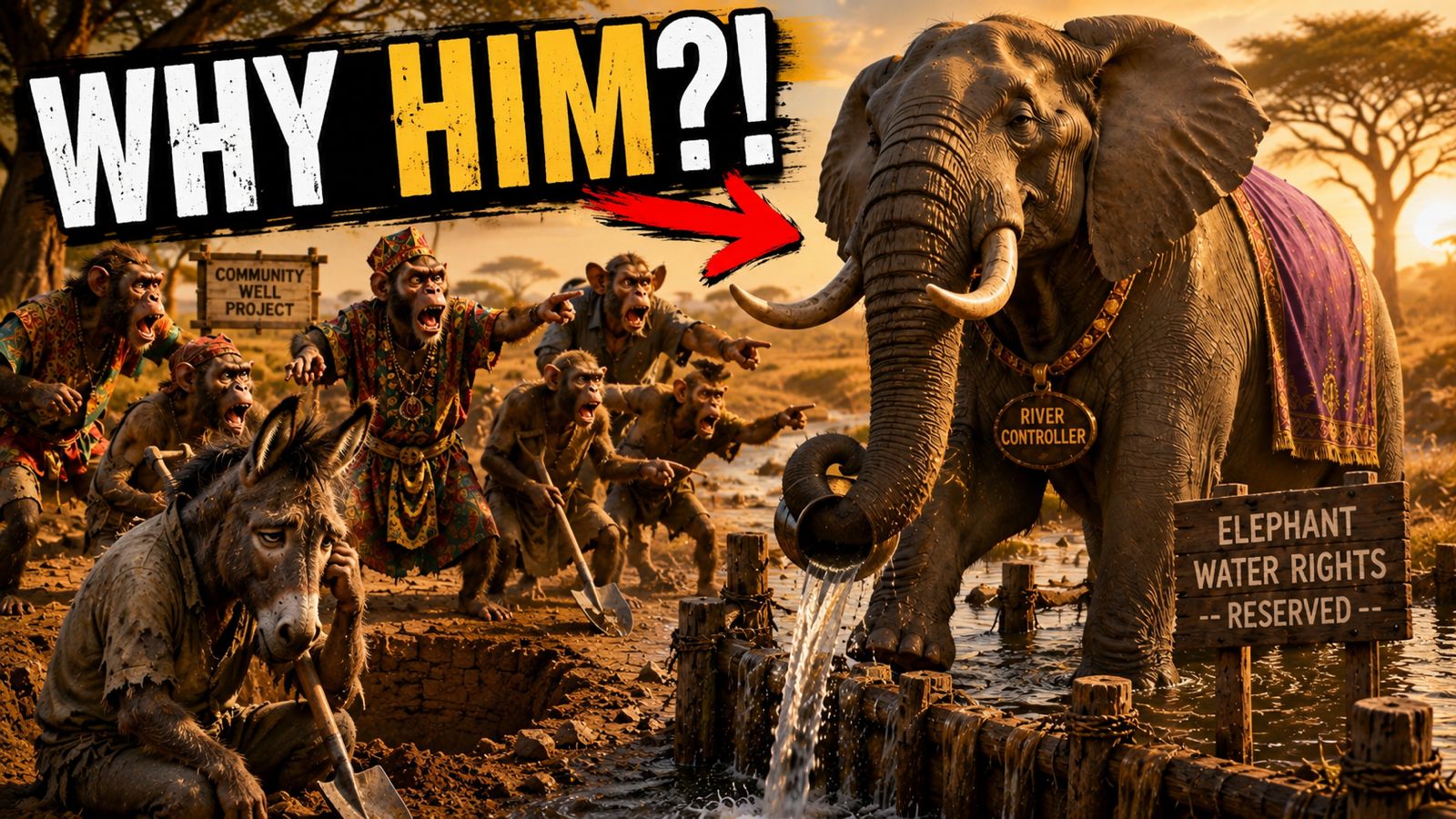
In this satirical episode of Savannah Unfiltered, a fictional jungle becomes a mirror for the social and political tensions that shape everyday life. What begins as a simple water shortage gradually exposes deeper questions about leadership, inequality, and who truly benefits when resources become scarce.
After
access to the river is suddenly restricted, animals are told to dig their own
wells, revealing how equal rules often hide unequal realities.
The monkeys
are the first to demonstrate this failure. Initially, they attempt collective
action, believing cooperation might help them survive the crisis. Yet their
efforts collapse almost immediately as disputes over leadership, recognition,
and control begin to overshadow the original problem. Instead of confronting
the system that created the scarcity, they turn against one another. The satire
reflects a familiar social reality: communities facing the same economic or
political pressures are often divided internally before they can challenge the
structures affecting them. Public frustration becomes redirected sideways
rather than upward.
The story
becomes even more revealing with the arrival of the elephant. Although the
river has officially been declared “for kings,” the elephant is quietly granted
access anyway. This shows how leadership influences who benefits, making the
rule seem unfair and unfairness more personal for us.
At the
emotional centre of the story stands the donkey. Unlike others, he keeps
digging, believing that his persistence might eventually lead to survival. His
effort reflects the experience of many ordinary people who are told hard work
guarantees success, even as the system remains unequal. The donkey embodies
exhaustion and hope, resonating with our own struggles.
What makes
the satire effective is that it refuses to treat inequality as accidental. The
story suggests unfair systems are often maintained through the illusion of
fairness-everyone is told they have the same chance, even when access and
protection are distributed unequally behind the scenes. This makes one reflect
on how fairness is often a façade hiding systemic bias.
Ultimately,
the Well Crisis is not really about water. It is about how societies
respond when survival itself becomes competitive. It asks whether leadership
should protect collective well-being or preserve privilege. More importantly,
it confronts the uncomfortable reality that inequality becomes most dangerous
when it is normalised.
Sadly,
eventually, inequality stops looking like a coincidence and starts looking like
design.
What are
your thoughts?
Watch the
video below and share your thoughts:https://youtube.com/shorts/DecmMaP3px0?si=Yr2jysaEM9Z-jVk0