
The Silent Struggle to Survive: A Philosophical and Sociological Reflection.
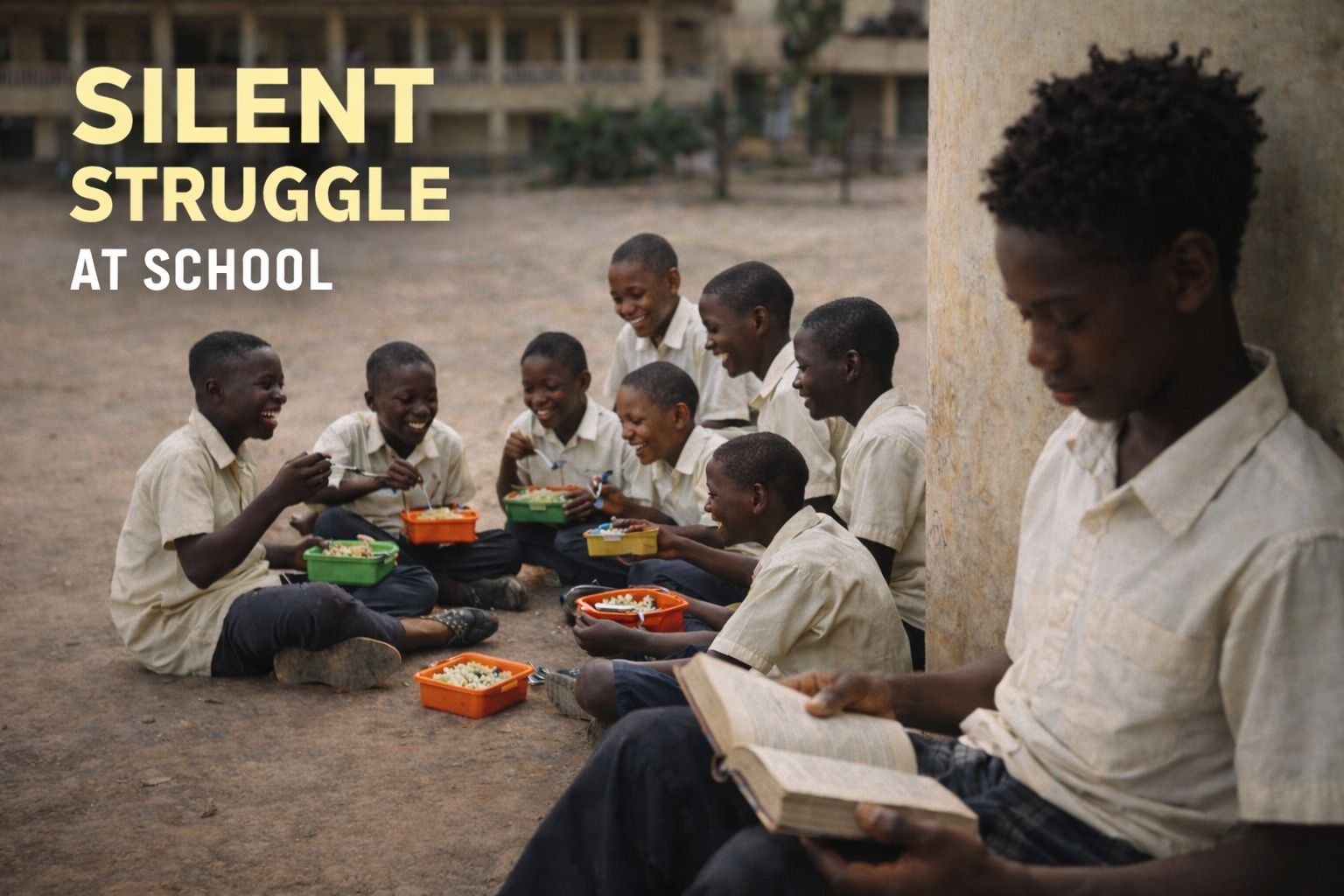
We are born to struggle; without it, life becomes useless. At the same time, taking responsibility is not limited to individuals. Still, it extends to all organs of society, which explains humanity's interdependence aimed at the better functioning of society. Imagine a hungry child attending school each day, struggling to concentrate on his studies and survive. The struggle reveals more than an individual hardship; it exposes a quiet crisis embedded in the social fabric. Hunger, in this narrative, is not simply the absence of food but the absence of security, recognition, and opportunity. The child's struggle to concentrate in class illustrates how material deprivation penetrates the inner life, shaping not only physical well-being but also self-worth and future possibility. This silent suffering invites philosophical and sociological reflection on responsibility, dignity, and the conditions under which human potential is either nurtured or denied.
From a philosophical perspective, the experience of hunger represents a profound threat to human dignity. Philosophers concerned with ethics and human vulnerability argue that the ability to act, think, and learn presupposes basic conditions of survival. A child who goes to school hungry is present in body but absent in spirit, forced to exist at the margins of the classroom experience. Without food, the child's decision to withdraw during mealtimes is not merely emotional; it reflects an awareness of social difference and an attempt to preserve dignity amid deprivation. Hunger thus becomes an invisible form of harm — one that silences rather than wounds.
Ethically, the narrative highlights the concept of responsibility toward others. Moral life does not begin with laws or institutions alone, but in everyday encounters between people. The moment when a peer chooses to share a meal with the hungry child marks a moral awakening: a recognition of another's suffering and a refusal to ignore it. This simple act restores not only physical strength but also a sense of belonging and worth. Compassion, in this context, becomes an ethical force capable of interrupting suffering, even if only temporarily. It demonstrates that care is not an abstract principle but a lived practice.
The story also complicates moral judgment by revealing constrained choice. The struggling parent, constantly absent due to exhausting labour, is not indifferent but trapped in an economic reality that limits agency. Philosophically, this challenges narratives that equate responsibility with individual failure. When survival itself becomes labour, moral blame becomes less clear. The inability to provide is not a moral defect but a symptom of broader structural conditions that normalise scarcity and exhaustion for some while shielding others from it.
From a sociological perspective, the story illustrates how inequality is reproduced through everyday experiences. Education is often presented as a pathway to social mobility, yet it assumes conditions that are not equally distributed. Hunger undermines learning, concentration, and participation, turning schools into spaces where social advantage is reinforced rather than neutralised. The child's initial academic struggles are not rooted in lack of ability, but in unmet basic needs. This reflects a broader pattern in which poverty quietly shapes outcomes long before merit can operate.
Social isolation plays a crucial role in this process. If the child separates himself from sitting with other children during lunch break simply because he has nothing to eat, the child's self-imposed separation highlights how deprivation produces shame and invisibility. Sociologically, exclusion often functions without direct hostility; individuals learn to remove themselves from spaces where their lack becomes visible. This internalised exclusion is one of the most damaging effects of inequality, as it erodes confidence and a sense of belonging. The intervention of a peer disrupts this pattern, illustrating the power of solidarity at the interpersonal level.
Imagine a situation in which the child eventually begins to concentrate in school and even succeeds academically with help from other children. On the surface, the child's eventual academic success and professional achievement may appear to validate ideals of perseverance and hard work. However, a sociological reading urges caution. This transformation hinges on an act of kindness that could easily not have occurred. The narrative, therefore, exposes the fragility of success stories that rely on chance rather than justice. While individual compassion can change lives, it cannot replace systemic responsibility. Societies that depend on isolated acts of kindness to protect children fail to address the roots of suffering.
The key question is: who is responsible when children suffer silently? Responsibility isn't just on families or children but on social systems, economic structures, and collective morals that allow this suffering. Children are future leaders but also current members of society, and their suffering reflects the moral state of the world they live in.
Ultimately, this story serves as a moral mirror. It asks whether societies are willing to recognise silent suffering and respond not only with compassion, but with justice. The survival and success of one child should not depend on luck or individual benevolence. A truly humane society is measured by whether it ensures that no child must struggle to survive in silence.
Watch the video: https://youtube.com/shorts/gy-yk0gL8qk